One Stroke Painting
One-stroke painting is a painting technique where a brush is loaded with multiple colors simultaneously to create highlights, shadows, and blending in a single stroke. Developed by artist Donna Dewberry, this method allows for quick and efficient painting of intricate designs, such as flowers, leaves, and other decorative patterns, with smooth gradients and seamless transitions.
Top 7 Types of One-Stroke Painting:
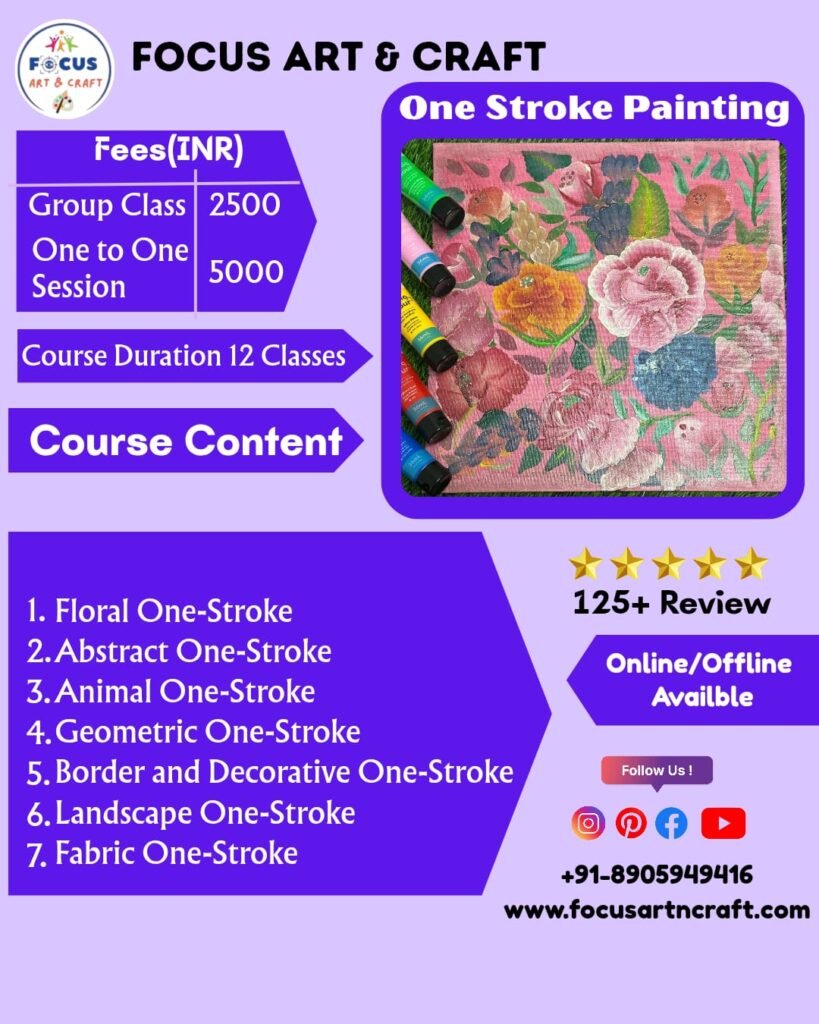
1. Floral One-Stroke: Focuses on painting flowers, leaves, and buds with smooth, blended strokes.
2. Abstract One-Stroke: Uses free-form patterns and shapes to create unique designs.
3. Animal One-Stroke: Creates animal shapes and features with a combination of blended strokes.
4. Geometric One-Stroke: Involves creating geometric shapes like squares, circles, and lines with blended colors.
5. Border and Decorative One-Stroke: Used for painting borders, vines, and ornamental patterns on surfaces.
6. Landscape One-Stroke: Depicts trees, mountains, water, and skies with gradient-filled brushstrokes.
7. Fabric One-Stroke: Specially done on fabric materials using fabric paints for clothing and decor.
Art Material Required for One-Stroke Painting
1. One-Stroke Brushes: Flat, wide brushes designed to hold multiple colors and create blended strokes.
2. Acrylic Paints: Fast-drying, vibrant paints suitable for layering and blending.
3. Palette: For mixing and organizing paint colors.
4. Canvas or Surface: Canvases, wood, fabric, or other smooth surfaces for painting.
5. Water: For thinning the paint and achieving smooth gradients.
6. Palette Paper: Disposable paper for mixing paints.
7. Painting Medium: Optional mediums for extending paint drying time or enhancing blending.
8. Masking Tape: Used to create clean lines or to secure the painting surface.
Top 5 Best Benefits of One-Stroke Painting
1 Time-Efficient: The technique allows for quick creation of detailed designs with minimal effort.
2. Enhances Creativity: It encourages experimenting with color blending, creating vibrant and unique patterns.
3. Improves Brush Control: It helps improve control over brush strokes and blending, leading to better precision.
4. Accessible for Beginners: The technique is easy to learn and suitable for all skill levels.
5. Stress Relief: Like other painting techniques, one-stroke painting can be therapeutic and calming.