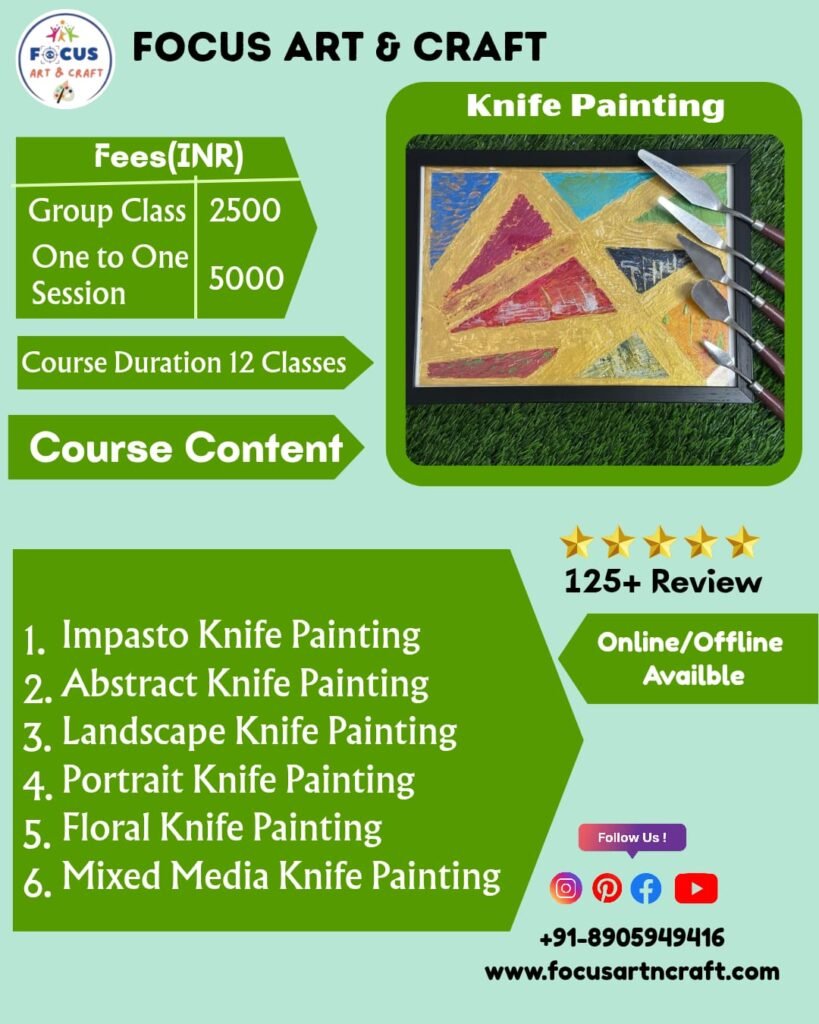
Knife Painting
Knife painting, also known as palette knife painting, is a technique where an artist uses a palette knife instead of a brush to apply paint to a canvas. This method allows for thick, textured layers, bold strokes, and a more dynamic, three-dimensional effect. It is often used in impasto style to create expressive, textured artwork, particularly in abstract or landscape paintings. The technique
can also be used for blending, scraping, and shaping the paint.
Top 6 Types of Knife Painting:
1. Impasto Knife Painting: A thick application of paint, creating a textured, three-dimensional
surface.
2. Abstract Knife Painting: Uses bold, expressive strokes and textures to create nonrepresentational
artwork.
3. Landscape Knife Painting: Depicts nature scenes (such as mountains, rivers, or trees) with
textured strokes that capture light and depth.
4. Portrait Knife Painting: Created using palette knives to paint human figures, often with
textured and exaggerated features.
5. Floral Knife Painting: Depicts flowers and plants with the palette knife, allowing for vibrant,
textured blooms.
6. Mixed Media Knife Painting: Combines palette knife techniques with other mediums, such as
acrylics, oils, or pastels, for added texture and effects.
Art Material Required for Knife Painting
1. Palette Knife: A flat, flexible tool used to apply, shape, and scrape paint onto the canvas.
2. Acrylic or Oil Paints: These paints are thick and suitable for impasto techniques, allowing for rich textures.
3. Canvas or Board: A sturdy surface, often primed, that can hold the heavy layers of paint applied with a knife.
4. Brushes: Occasionally used alongside the knife for blending or detailing certain areas.
5. Palette: For mixing and preparing paints before applying them with the knife.
6. Mediums: For altering paint consistency, such as impasto gel (for acrylics) or linseed oil (for oils).
7. Rags or Paper Towels: For wiping excess paint off the knife or canvas during the process.
Top 5 Best Benefits of Knife Painting
1. Rich Texture: Knife painting creates thick, three-dimensional textures that add depth and character to the artwork.
2. Expressive Strokes: The bold, sharp strokes allow for dynamic and unique artistic effects.
3. Easy to Clean: Palette knives are simple to clean compared to brushes, making them low maintenance tools.
4. Enhanced Creativity: It encourages experimentation with layering, scraping, and blending techniques.
5. No Brush Marks: Unlike brush painting, knife painting results in smooth, clean strokes without bristle marks.